Types of
Black Holes
Exploring stellar, supermassive and intermediate black holes
Types of Black Holes
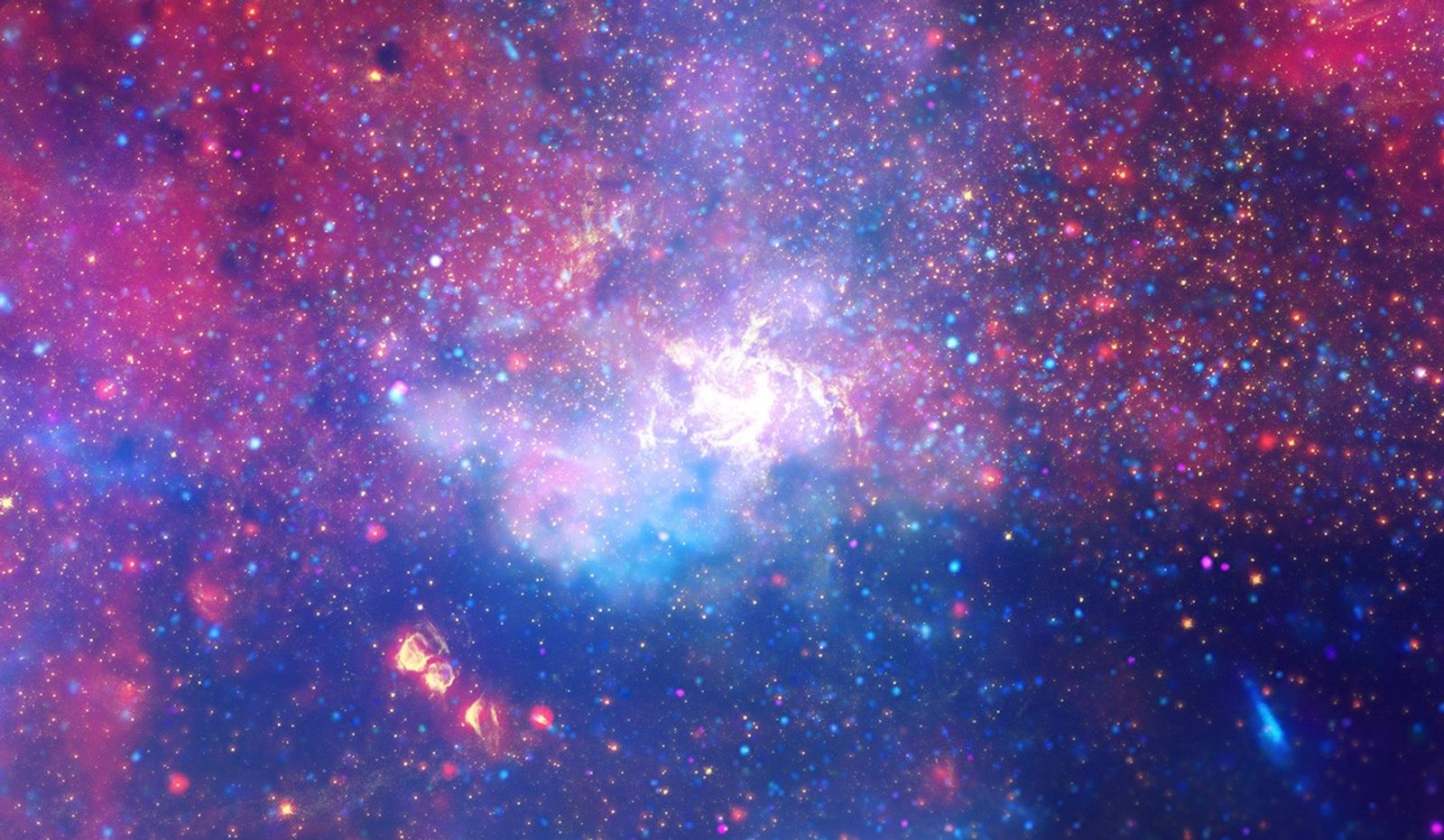
Astronomers generally divide black holes into three categories according to their mass: stellar-mass, supermassive, and intermediate-mass. The mass ranges that define each group are approximate, and scientists are always reassessing where the boundaries should be set. Cosmologists suspect a fourth type, primordial black holes formed during the birth of the universe, may also lurk undetected in the cosmos.
Stellar Black Holes
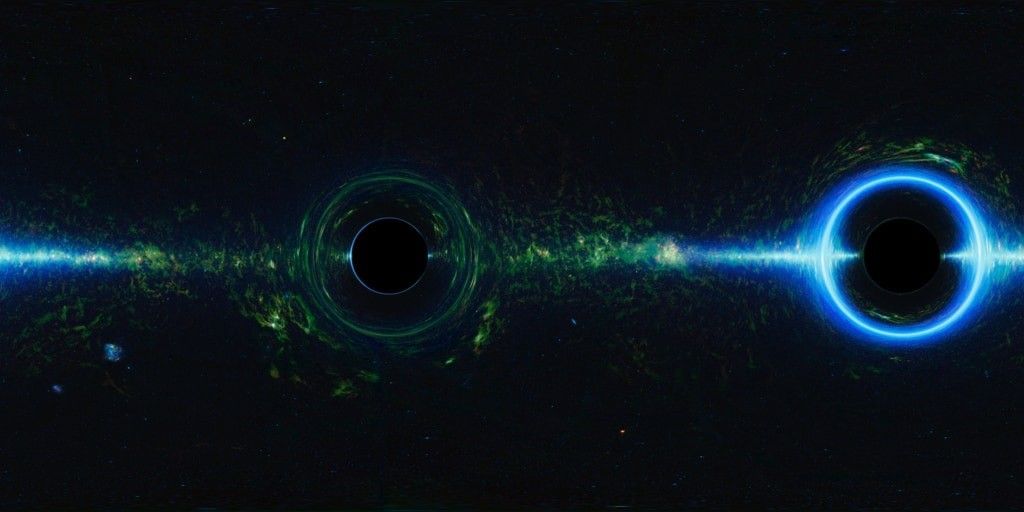
When a star with more than eight times the Sun’s mass runs out of fuel, its core collapses, rebounds, and explodes as a supernova. What’s left behind depends on the star’s mass before the explosion. If it was near the threshold, it creates a city-sized, superdense neutron star. If it had around 20 times the Sun’s mass or more, the star’s core collapses into a stellar-mass black hole.
The masses of these newly born objects can range from a few to hundreds of times the Sun’s mass. Stellar-mass black holes can continue to gain mass through collisions with stars and other black holes. Nearly all the stellar-mass black holes observed so far have been found because they’re paired with stars. In some cases, called X-ray binaries, the black hole pulls gas off the star into a disk that heats up enough to produce X-rays. Scientists think there may be as many as 100 million stellar-mass black holes in our galaxy alone.
Supermassive Black Holes
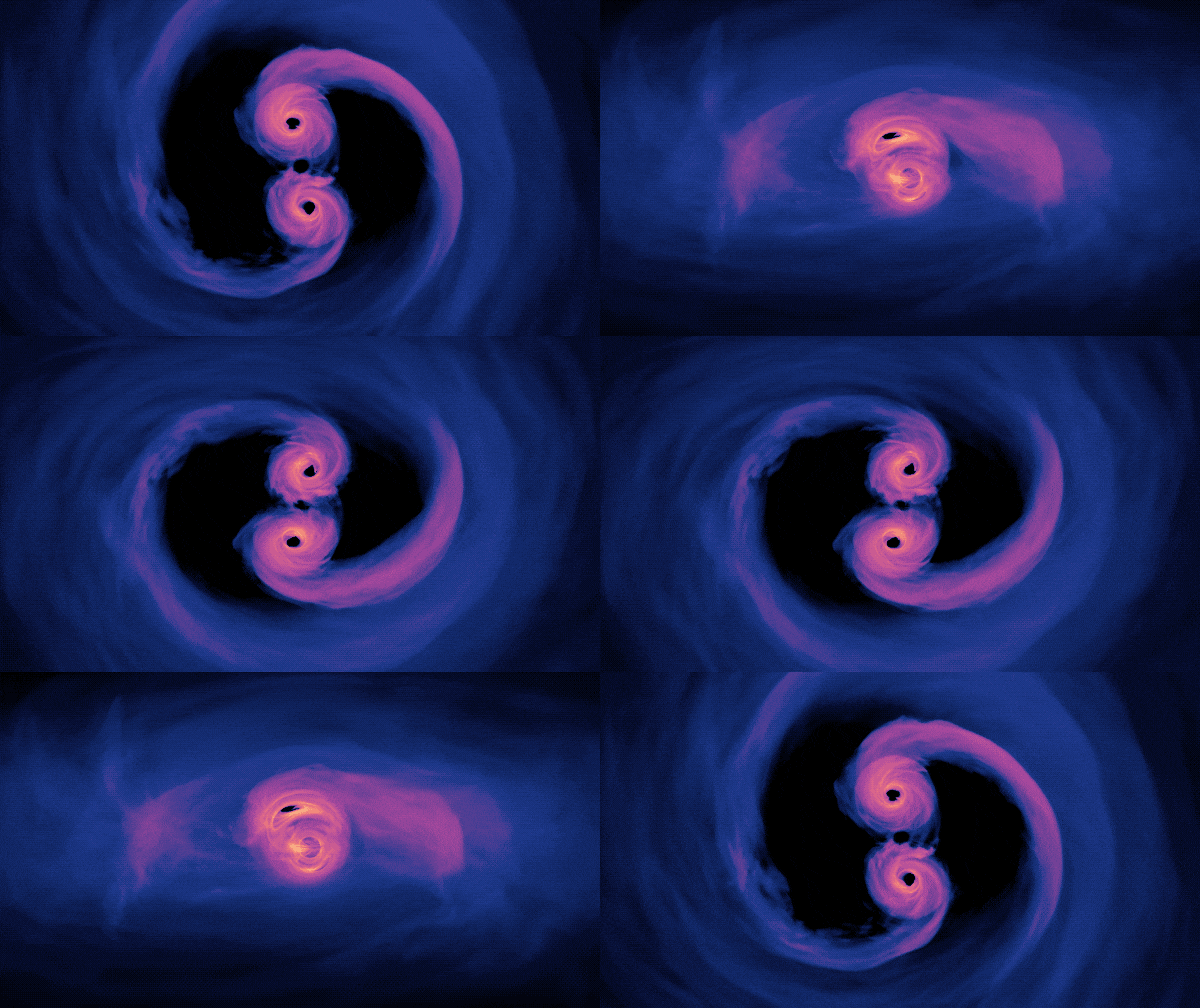
Almost every large galaxy, including our Milky Way, has a supermassive black hole at its center. These monster objects have hundreds of thousands to billions of times the Sun’s mass. The one at the center of our galaxy, Sagittarius A* (pronounced ey-star), is 4 million times the mass of the Sun – relatively small compared to those found in some other galaxies. For example, the black hole at the center of galaxy Holmberg 15A holds at least 40 billion solar masses.
Scientists aren’t sure how these monster objects came to be. Observations of distant galaxies show that some supermassive black holes formed in the first billion years after the birth of the universe. It’s possible these black holes began with the collapse of supermassive stars in the early universe, which gave them a head start.
Intermediate Black Holes
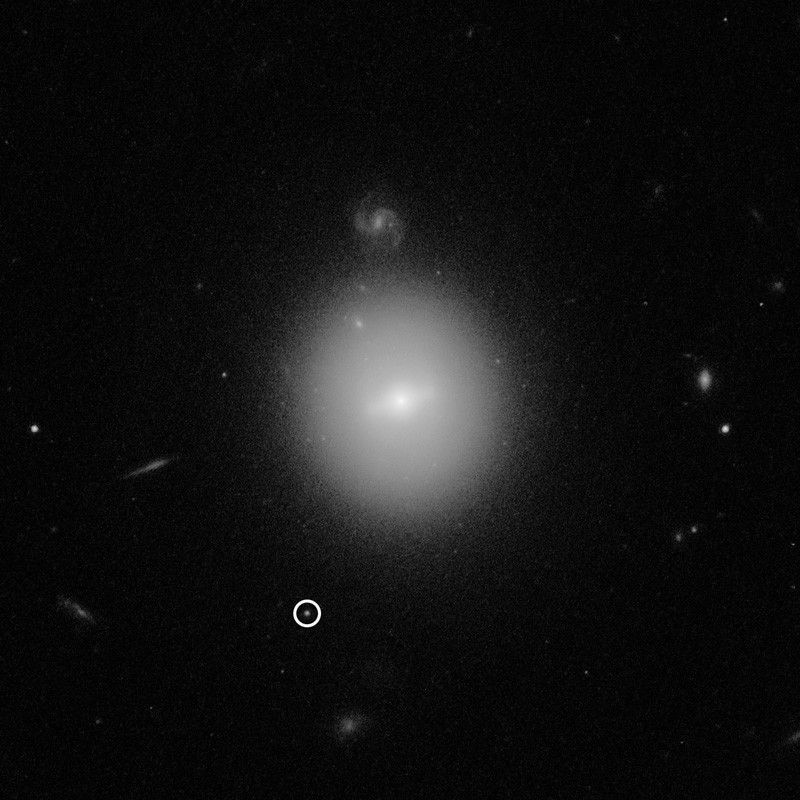
Scientists are puzzled by the size gap between stellar-mass and supermassive black holes. They think there should be a continuum of sizes because, over cosmic time, collisions between stellar-mass black holes should have created some intermediate-mass black holes. These should range from around one hundred to hundreds of thousands of times the Sun’s mass. Scientists are actively hunting for examples of these so-called missing-link black holes. Numerous candidates have been identified but have proven difficult to confirm.
Primordial Black Holes
Scientists theorize that primordial black holes formed in the first second after the birth of the universe. In that moment, pockets of hot material may have been dense enough to form black holes, potentially with masses ranging from 100,000 times less than a paperclip to 100,000 times more than the Sun’s. Now, 13.8 billion years later, scientists haven’t yet found definitive proof these primordial black holes ever existed. It’s possible, however, that they could have evaporated as the cosmos aged due to quantum mechanical processes occurring at the edges of their event horizons.